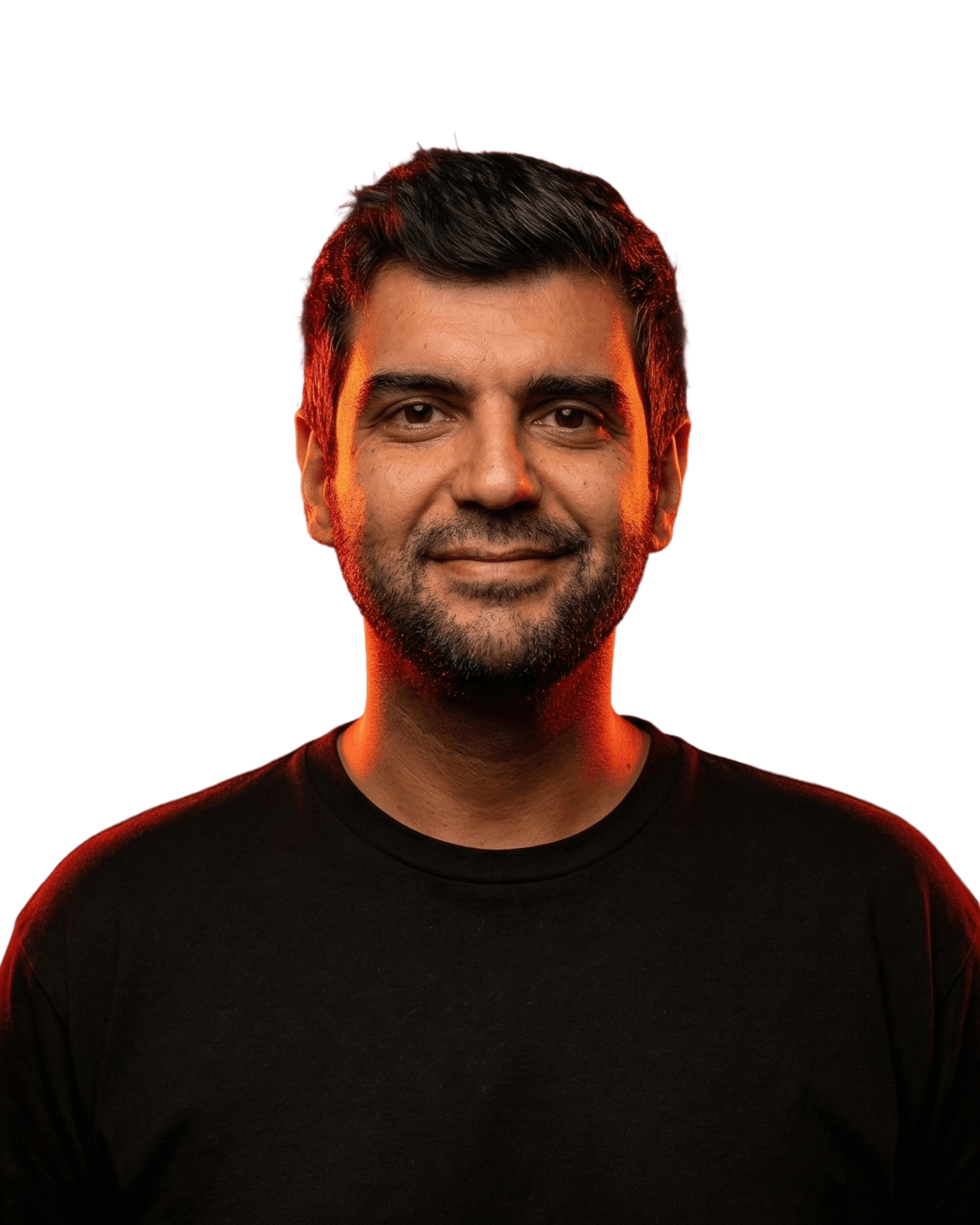

Ala Shaabana
Co-Founder, Bittensor
Bittensor’s co-founder examines how verification and subnet incentives organise contributions to open intelligence.
Ala at Proof of Talk Paris 2026
Why the room needs them.
Bittensor’s co-founder delivered Paris’s subnet keynote; dated interviews explain his focus on verification and the incentives that direct AI work.
The full account.
Ala Shaabana spoke at Proof of Talk Paris 2026 as co-founder of Bittensor. He delivered the solo keynote “Subnets, Signals, and Scale: The Crucible of Open Intelligence” on the Hecto Main Stage from 13:05 to 13:20 on 2 June, in the Bittensor track hosted by Taostats. The programme gave him a dedicated session on open intelligence rather than a panel role. Its title connected the organisation of subnets with the problem of scaling a network built around contributions to artificial intelligence.
His founding affiliation is recorded in Crucible Labs’ team biography and in a CoinShares interview published on 16 January 2026. CoinDesk also identified him as Bittensor’s co-founder in its June coverage of the Paris keynote. The current profile retains that founding affiliation without converting it into a claim about an executive appointment.
In the CoinShares interview, Shaabana described blockchain verification as useful for assessing AI contributions. He explained Bittensor through specialised subnets and the incentives that reward participants for the value of their work. The interview covered different activities within that structure, including inference, training and storage, rather than treating intelligence as a single undifferentiated service. He also discussed a possible future in which the network provides a common connective layer for AI, framing that as an aspiration.
CoinDesk’s account of the Paris keynote placed incentives at the centre of his explanation: participants optimise for what a subnet rewards. That documented statement adds context to the programme title without reconstructing the entire talk. The article was corrected on 8 June to clarify that a comparison involving Bitcoin hash rate does not measure general computing or AI capability. This profile therefore uses the reported discussion of incentives and omits the misleading numerical comparison.
What Ala believes about the next ten years.
Years of shipping.
Lines that keep proving correct.
“Show me the subnet, and I'll tell you what the miners are optimizing for.”
The next Proof of Talk is in Abu Dhabi.
Louvre Abu Dhabi, 3–4 December 2026. Admission is by application, and the room is capped at 2,000.
Request access