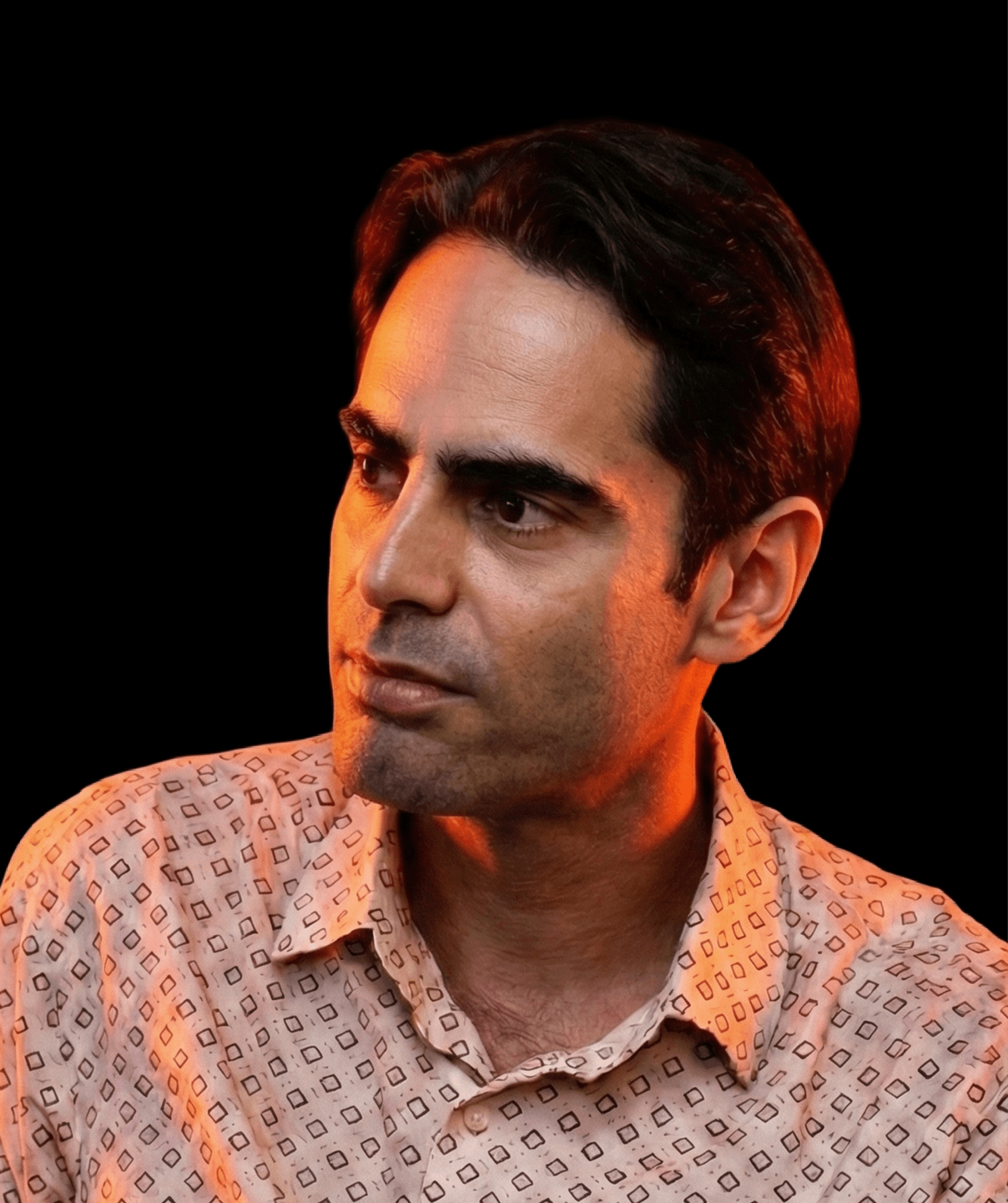

Ben Schiller
Head of Communications and Senior Adviser, Miden
After six years at CoinDesk, Schiller joined the privacy-focused blockchain Miden in September 2025 and argued in CoinDesk in April 2026 that the question for blockchains is no longer whether to offer privacy but what kind.
Why the room needs them.
Ben Schiller, Head of Communications and Senior Adviser at Miden, moderated a panel on digital cash at Proof of Talk Paris 2026. He left CoinDesk in September 2025 after six years, departing as managing editor for features and opinion.
The full account.
Ben Schiller is Head of Communications and Senior Adviser at Miden, a zero-knowledge blockchain built around client-side proving that spun out of Polygon as an independent project in April 2025. Miden announced on 10 September 2025 that Schiller was joining its team, the same day he announced that he had left CoinDesk after six years.
CoinDesk's author biography lists him as a managing editor from 2019 to 2025, and he was managing editor for features and opinion when he left. Before CoinDesk, he was editor-in-chief of Breaker Magazine, a crypto publication launched in 2018 that shut down in 2019, and a staff writer at Fast Company from 2011 to April 2018. Talking Biz News reported in September 2025 that he had covered crypto since 2013. He holds a bachelor's degree from the University of Sussex and a master's degree from the London School of Economics.
Since April 2026 Schiller has hosted The Privacy Podcast, which Miden introduced as conversations with the technologists, cryptographers, regulators and founders building what it called the new privacy era. Guests have included Miden's co-founders Azeem Khan and Bobbin Threadbare, and an episode was released on 11 September 2026.
In a CoinDesk opinion piece published on 22 April 2026, Schiller argued that the debate over whether blockchains need privacy is over, and that the question left is what sort of privacy the industry builds. He contrasted privacy that depends on trusting an intermediary with zero-knowledge cryptography, which can prove that a transaction is valid without revealing the underlying data, and wrote that regulatory compliance does not require that everyone can see a user's transactions.
Schiller spoke at Proof of Talk Paris 2026 as the moderator of "The New Architecture of Digital Cash: Stablecoins, Tokenised Deposits and Money Market Funds", a panel on the Hecto Main Stage on 3 June 2026, the summit's second day. The panellists were Emma Landriault, David Cunningham and Tero Reuna.
Schiller also wrote the play Happenstance, billed by its organisers as the world's first bitcoin play, which was performed at the Kraine Theater in New York's East Village in October 2024. It follows a man facing prison for his role in the early development of Bitcoin.
What Ben believes about the next ten years.
Years of shipping.
Lines that keep proving correct.
“The question for the industry is not whether privacy. That debate is over.”
“If Bitcoin gave us trustless transfer and Ethereum gave us programmable trust, ZK-native blockchains offer verifiable privacy: the ability to prove that everything happened correctly without revealing what actually happened.”
“Bitcoin's really a movement. Millions of people subscribing not only to a digital asset, but to a set of values: decentralization, self-sovereignty, privacy, personal empowerment.”
What they have built, written, and backed.
Built
- The Privacy PodcastA Miden podcast Schiller has hosted since its launch in April 2026, introduced by Miden as conversations with technologists, cryptographers, regulators and founders; guests have included Miden co-founders Azeem Khan and Bobbin Threadbare, and an episode was released on 11 September 2026.
- HappenstanceA play Schiller wrote, billed by its organisers as the world's first bitcoin play and performed at the Kraine Theater in New York's East Village in October 2024, about a man facing prison for his role in the early development of Bitcoin.
The next Proof of Talk is in Abu Dhabi.
Louvre Abu Dhabi, 3–4 December 2026. Admission is by application, and the room is capped at 2,000.
Request access