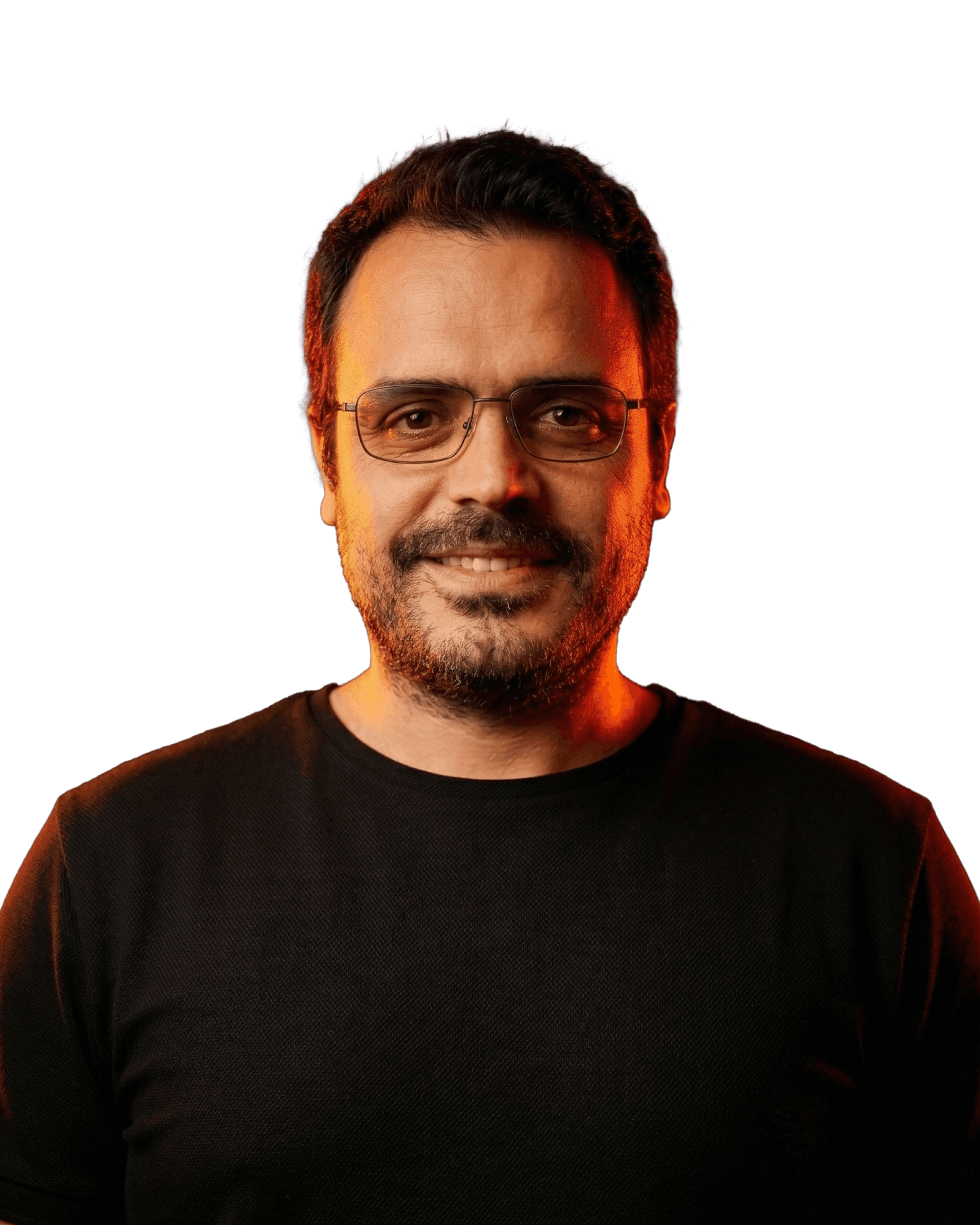

Kostas Chalkias
Chief Cryptographer & Co-founder, Mysten Labs
Kostas Chalkias is a cryptographer whose work runs from post-quantum signatures at R3 and zero-knowledge tooling at Meta to the cryptography of the Sui blockchain at Mysten Labs.
Why the room needs them.
Kostas Chalkias co-founded Mysten Labs, the company behind the Sui blockchain, and is its Chief Cryptographer. He spoke at Proof of Talk Paris 2026 on securing onchain finance.
The full account.
Kostas Chalkias is Co-founder and Chief Cryptographer of Mysten Labs, the company behind the Sui blockchain, the title given in a Sui blog post dated 27 August 2026 and on the Mysten Labs website. He spoke at Proof of Talk Paris 2026 as Chief Cryptographer & Co-founder, Mysten Labs, on the panel "DeFi Under Attack: Securing Onchain Finance and the Machine Economy" on the Hecto Main Stage on 3 June 2026. Charles Guillemet, Rodrigo Coelho and Jason Jiang also sat on the panel, which Nikola Stojanow moderated.
Chalkias holds a PhD in identity-based cryptography. According to The Block, he pivoted to cryptography and security after contacting Mike Hearn, an early bitcoin developer who was also lead platform engineer at R3. Chalkias went on to spend two years at R3 as Lead Cryptographer and Blockchain Engineer. A Sui blog post he co-wrote in August 2026 refers to a production stateless post-quantum signature scheme at R3's Corda in 2017, calling it the first stateless and multi-times quantum-safe signature in the distributed ledger space. He is the first-named author of "Blockchained Post-Quantum Signatures" (BPQS), a paper co-written with Mike Hearn and others and listed for the 2018 IEEE International Conference on Blockchain.
He was later Lead Cryptographer at Meta, where, according to Sui's author page, he oversaw cryptography work on the Libra project, collaborated with WhatsApp on payment encryption and contributed to the Novi wallet. In August 2021 he co-authored Meta's engineering post announcing Winterfell, an open-source, general-purpose STARK prover and verifier written in Rust.
In late 2021 Chalkias co-founded Mysten Labs with Evan Cheng, Sam Blackshear, Adeniyi Abiodun and George Danezis, and Sui's mainnet launched on 3 May 2023. The Block credits him with a key role in developing Sui and the Walrus decentralised storage layer, and names him as the main contributor to zkLogin and HashWires range proofs. Sui's author page credits him with more than 50 scientific papers and 8 U.S. patents, notes his public disclosure of vulnerabilities in signature schemes and solvency proofs at major crypto exchanges, and says he teaches Web3 and blockchain security as a professor at the American University of Sharjah. In a Decrypt article of 3 June 2026 on Walrus memory for AI agents, he argued that compute is not the only bottleneck in AI and that memory matters as much.
What Kostas believes about the next ten years.
Years of shipping.
Lines that keep proving correct.
“It will be the norm. I don't see how we can escape from this.”
“The major misconception in AI is that compute is the only bottleneck. The major issue is we're using a lot of memory as humans, and we want our LLMs to actually learn about us.”
What they have built, written, and backed.
Built
- Blockchained Post-Quantum Signatures (BPQS)A post-quantum signature scheme designed for blockchains and distributed ledgers, set out in a 2018 paper on which Chalkias is first-named author, with Mike Hearn among the co-authors.
- WinterfellA general-purpose STARK prover and verifier written in Rust, open-sourced by Meta in August 2021; Chalkias co-authored the announcement.
- zkLogin and HashWiresThe Block names Chalkias as the main contributor to zkLogin, an OAuth-based authentication system, and to HashWires range proofs.
- Sui and WalrusAs co-founder and Chief Cryptographer of Mysten Labs, credited by The Block with a key role in developing the Sui blockchain and the Walrus decentralised storage layer.
The next Proof of Talk is in Abu Dhabi.
Louvre Abu Dhabi, 3–4 December 2026. Admission is by application, and the room is capped at 2,000.
Request access