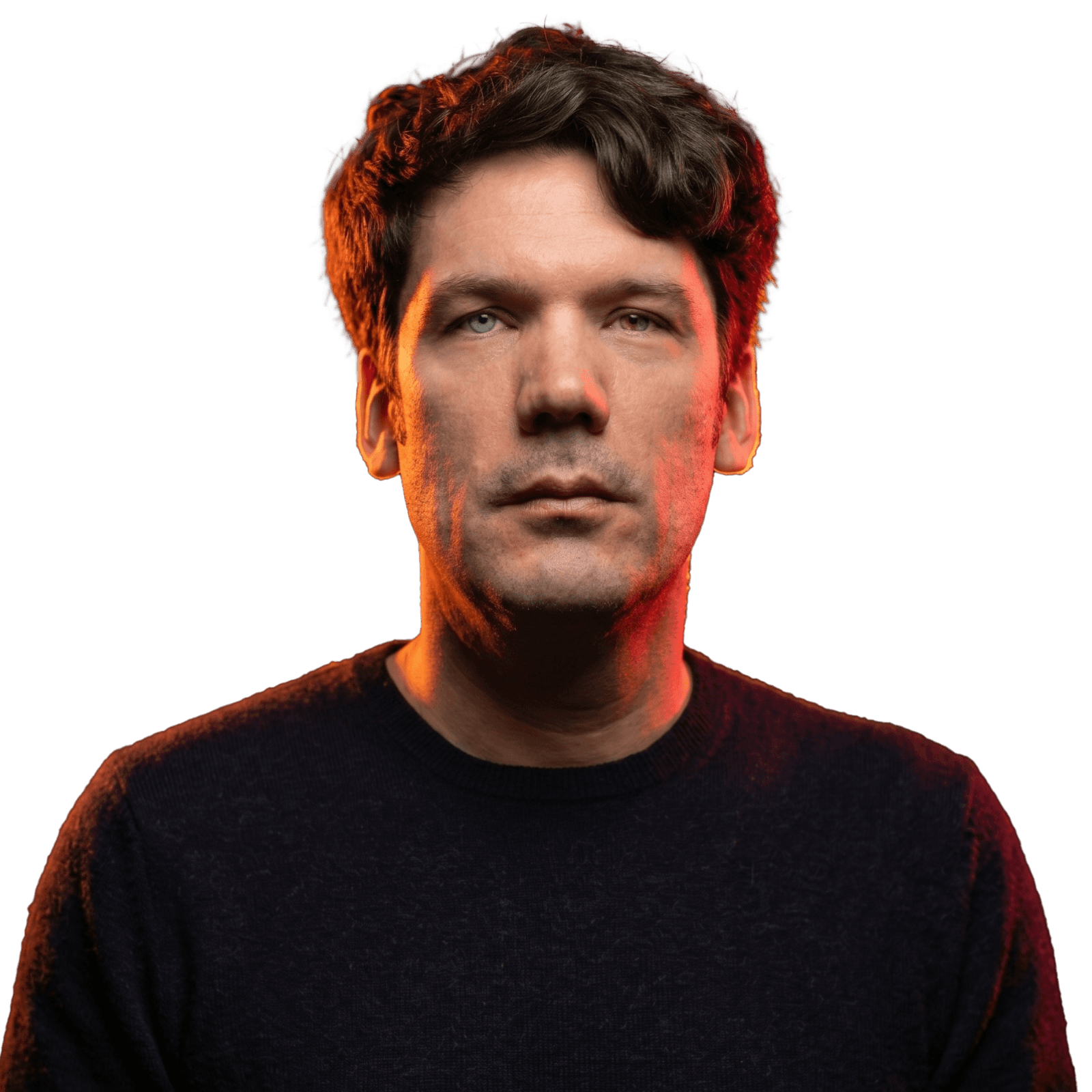

Moritz Platt
Capital Markets Technology Manager, Google
Builds cloud infrastructure for capital markets at Google, and asks in his research whether permissionless networks can be governed one person, one vote rather than plutocratically.
Why the room needs them.
Moritz Platt is a Capital Markets Technology Manager at Google and a Visiting Fellow at King's College London. King's awarded him a PhD on reputation-based consensus in August 2025. He has co-written Google Cloud's published accounts of Deutsche Börse Group's cloud-native trading engine and of a DZ BANK oracle architecture for decentralised applications. He spoke at Proof of Talk Paris 2026 as a panellist on “How Institutions Actually Access Tokenised Assets”.
The full account.
Moritz Platt is a Capital Markets Technology Manager at Google, based in Berlin. Google's own people page describes his focus as distributed systems design and architecture, and says he “designs and builds cloud-based financial platforms”; King's College London records the same external position, held at Google Germany GmbH. He is also a Visiting Fellow in the Department of Informatics at King's, researching identity-based consensus protocols for decentralised systems.
He spoke at Proof of Talk Paris 2026 as a panellist on “How Institutions Actually Access Tokenised Assets”, on the Taostats Stage from 10:00 to 10:35 on 3 June 2026, alongside Fabian Dori of Sygnum, Julian Sawyer of Zodia Custody and Matthew Felice Pace of Spectrum Nodes. Xavier Gomez, Chief Operating Officer of Vancelian, moderated.
His published work at Google Cloud is written jointly with the institutions concerned. In January 2025, with Ferudun Oezdemir, Head of AD Trading Core at Deutsche Börse Group, he documented a cloud-native trading engine built over ten months, which the post presents as one of the first major results of the 2023 partnership between the exchange group and Google Cloud. A second post, in October 2025 with Peter Kohl-Landgraf of DZ BANK, sets out an architecture for oracle data a bank can trust, resting on Confidential Space trusted execution environments with remote attestation. Its worked example is the Smart Derivative Contract, an ERC-6123 protocol that DZ BANK had already tested on the Bundesbank Trigger Solution.
King's describes his research as decentralised systems security, in particular the prevention of identity manipulation attacks. His PhD there, “Reputation-Based Consensus in Decentralised Systems”, awarded in August 2025 under Professor Peter McBurney, asks whether permissionless networks can be governed on a one person, one vote basis rather than plutocratically; it concludes that the mechanism it proposes resists Sybil attacks under relaxed conditions but not under generic ones. With Daniel Platt and Peter McBurney he had already formalised permissionlessness, Sybil attack resistance and freeness, and shown that no blockchain protocol can achieve all three at once.
Before King's he took a BSc at Technische Universität Berlin and an MSc at Birkbeck, University of London. Elsewhere in 2026 he spoke at Paris Blockchain Week in April, on T+0 settlement, and at the Crypto Valley Conference in Zug on 28 May.
What Moritz believes about the next ten years.
Years of shipping.
Lines that keep proving correct.
“My work sits at the intersection of decentralised systems security and the broader challenge of creating fairness under adversarial conditions.”
“We demonstrate that no blockchain protocol can simultaneously achieve all three characteristics within the paradigm established by our formalisation. Thus, a trilemma emerges for distributed ledger technology designers, who must balance these characteristics thoughtfully.”
“In the world of digital assets, 24/7 operations are required to reduce execution risk. Market participants also demand choice of market access, including internet connectivity to execute trades anytime, anywhere.”
What they have built, written, and backed.
Built
- “Trading in the Cloud”, with Deutsche Börse GroupGoogle Cloud post of 15 January 2025, co-written with Ferudun Oezdemir, Head of AD Trading Core at Deutsche Börse Group. It documents a cloud-native, instrument-agnostic trading engine built over ten months, with 24/7 availability and a cloud-native internet API for access, and presents it as one of the first major results of the 2023 partnership between Deutsche Börse Group and Google Cloud.
- “The oracles of DeFi”, with DZ BANKGoogle Cloud post of 2 October 2025, co-written with Peter Kohl-Landgraf, Digital Transformation Manager, Capital Markets at DZ BANK. It sets out an architecture for trustworthy oracle data using Confidential Space trusted execution environments with remote attestation, Binary Authorization at SLSA Level 3 and Private Service Connect. The worked example is the Smart Derivative Contract, an ERC-6123 protocol that DZ BANK had already tested on the Bundesbank Trigger Solution.
- “Reputation-Based Consensus in Decentralised Systems”PhD thesis, King's College London, awarded 1 August 2025, supervised by Professor Peter McBurney with Laurence Tratt and Daniele Magazzeni. It asks whether permissionless networks can be governed one person, one vote rather than plutocratically, proposes a mechanism combining proof-of-stake primitives with a reputation system, and finds that it resists Sybil attacks only under relaxed conditions.
- Frontiers research topic on institutional DLTTopic editor, with Francesco Pierangeli of the University of Birmingham and Karen Elliott of Birmingham Business School, for “Institutional distributed ledger technology (DLT): architectures, incentives and the transformation of digital infrastructure” in Frontiers in Blockchain. The topic is accepting submissions until 31 March 2027; he is listed there under his King's College London affiliation.
The next Proof of Talk is in Abu Dhabi.
Louvre Abu Dhabi, 3–4 December 2026. Admission is by application, and the room is capped at 2,000.
Request access